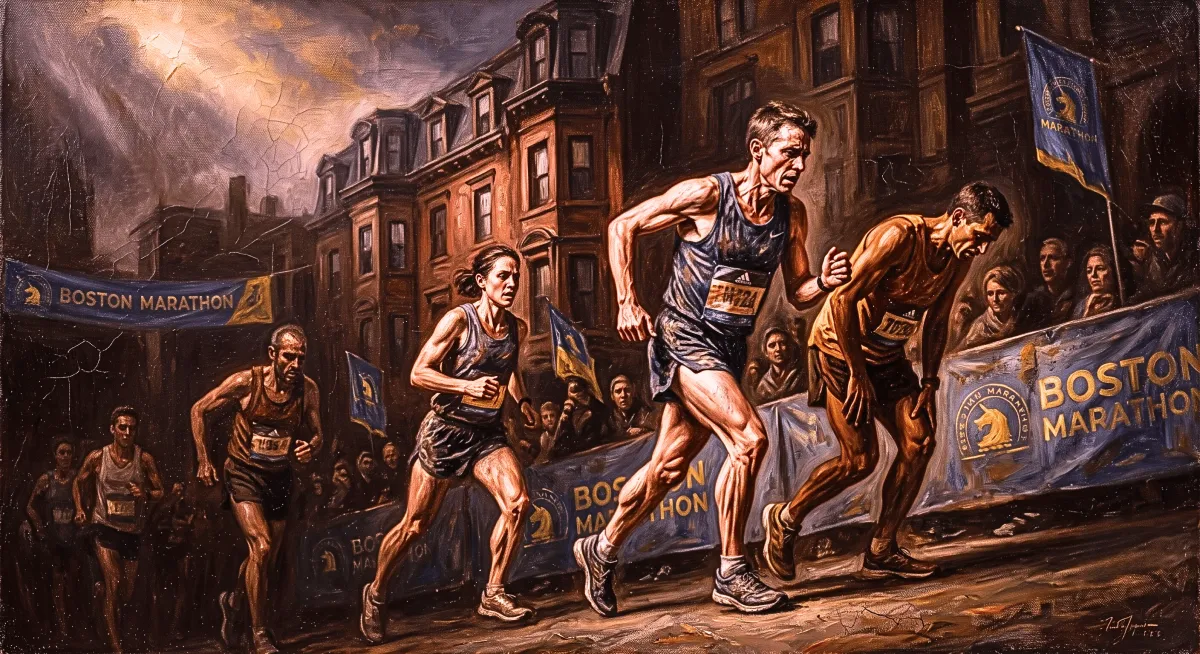
Your Change Initiative Failed Because You Trained for a Marathon and Made Everyone Else Sprint
Your Q3 Gantt chart is a fiction, and you know it. The Prosci consultants insist they are making progress, but the adoption metrics show a +/- 3% difference. You spent a week talking to the front line to figure out what happened, and what you found is worse than resistance — it's ambivalence and exasperation. Half your front-line leaders can't name the initiatives. The other half can name the project, but can't hide the exhaustion under the "I'm talking to the boss" face.
"How can this be? We've been talking about these initiatives for months!"
Exactly. You've been talking about change for months.
Your team started talking about "the change" almost two years ago. Two years to argue, to doubt, to change your mind, to change it back. Then, like a starter at a race, you gave the organization an email blast.
"…and GO!"
Eighteen months of SWOT analysis, number crunching, and strategy development sounds like project planning. The Gantt chart says so right here.
It wasn't planning. It was training.
Not skills training. Something older and stranger than that. We'll come back to what it actually was.
During those eighteen months, leadership worked through the doubts, the political tradeoffs, the quiet mourning of a model they had built and now had to bury. By the time the initiatives were finalized, the C-suite wasn't just aligned on what — they were aligned on why, and they had grieved the personal cost.
Then Q1 hit. You sent an email. You held a town hall with directors. You expected the meeting to cascade.
It didn't.
Here is the failure: you gave the organization two weeks of exposure to reach the emotional and cognitive state that took your leadership team two years to build.
That's the whole failure.
Lessons from the Boston Marathon
Thirty thousand people run Boston. They do not start together.
The professionals — whose whole life is the race — start at the front. Behind them, the serious amateurs who pack on miles year-round and train hard for twelve months. Then the casual runners: four days a week, competing priorities, six months of focused prep. Then the party crowd who ran a few long weekends in March so they wouldn't embarrass themselves. Then the people who signed up the week before registration closed, who will finish by walking, and who will tell their bowling team about it for a decade.
The gun goes off. The professionals disappear. The serious runners follow. The pack stretches like an accordion until, twenty-plus minutes later, the last walkers cross the start line — running a different race than the professionals ran, on the same course, on the same day.
Now map it:
C-suite = professionals. Chronic preparation. They've crossed the desert and come back — many times.
Directors = serious amateurs. Training toward the executive tier, closer to the strategic conversation. They've seen the desert once or twice and trust the map.
Front-line leaders = casual runners. Real competence, real competing priorities. They've heard the desert described but aren't sure they believe in it.
The rest of the workforce = the party crowd and the bowling team. They came for a paycheck, a decent Tuesday, and something to talk about at lunch. Nobody told them there was a desert. Nobody told them to pack water. That's not a character flaw — that's the job description.
When the CEO's launch email goes out, that's your starting gun. The accordion is forming before the message hits inboxes. By Q3, the front of the pack has forgotten there are still people crossing the start line.
So what is leadership, then?
Leadership isn't the Gantt chart. It isn't the strategy deck. It isn't ten initiatives handed down like edicts from Mount Sinai.
Leadership is whatever you did in those eighteen months that let you arrive at the starting line ready to run. Whatever that was — and it was not a Gantt chart — you didn't give it to anyone else.
If you want the organization to run your race, give them what you gave yourself.
If you can't give them that, shrink the race.
The problem is most executives can't name what they gave themselves. They think it was strategy work. It wasn't. It was something older, and it has a shape, and it has stages, and once you can see it you can build it for other people.
That's the next conversation.

